Tata Consultancy Services (TCS) on Friday announced the launch of an Artificial Intelligence (AI) Experience Zone and Design Studio in London, and said its continued investments in the UK will create 5,000 new jobs across the country over the next three years. Currently, TCS supports over 42,000 direct and indirect jobs across the United Kingdom. In FY2024, TCS contributed 3.3 billion pounds to the UK economy, according to a regulatory filing by the company.

The message is becoming clearer: Employees who fail to meaningfully integrate AI into their work risk falling behind in performance assessments.

The selloff in domestic information technology stocks intensified on Friday, with the Nifty IT index sliding as much as 5.2 per cent during the session before paring losses to close 1.44 per cent lower.

The FM proposed a rule-based automated process for small taxpayers in FY27 Budget.

'We sent just 500 people from India to the US on H-1B visas. There is no dependence on H-1B visas.'

No income tax relief, but compliance burden eased for youth and middle class through lower TCS.
A Jefferies report warns that the IT services sector is set for a structural shift due to AI, requiring talent and operating model overhauls and increasing cyclicality.

This single amendment, unfortunately, overshadows much of the Budget's promise, explains Harsh Roongta.
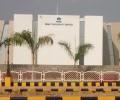
While TCS cited evolving business needs and future readiness as reasons, industry experts say the action is a cost-cutting measure aimed at improving operating margins that have remained below the firm's aspirational range despite multiple efforts.

Benchmark BSE Sensex fell 558 points on Thursday amid heavy selling in IT shares, as concerns over AI-led disruptions and waning hopes of a Fed rate cut after firm US economic data weighed on investor sentiment.
The buyback comes at a time when Infosys shares have declined 19 per cent so far this year.

'4 lakh to 5 lakh people graduating in computer science getting jobs in software companies will not happen.'
India's largest IT firm Tata Consultancy Services has allegedly forced around 2,500 employees in Pune to resign from their jobs, the IT employees' body NITES said in a letter to Maharashtra Chief Minister on Wednesday.

Tata Consultancy Services (TCS), Cognizant and eight other major corporations have been questioned by US Senators for filing thousands of H-1B skilled labour visa petitions after conducting "mass layoffs" of American employees.


While FY25 attrition rates remained below pre-Covid levels, most companies experienced a 1 to 3 percentage point increase compared to FY24.

While Infosys never had a presence, Wipro's Venezuelan unit was liquidated many years ago.
India's largest IT services firm Tata Consultancy Services (TCS) on Thursday reported a 1.39 per cent increase in consolidated net profit to Rs 12,075 crore in the July-September quarter of this financial year.

The Nifty IT index hit a more than nine-month low, trading at its weakest level since April 17, 2025.
India's largest IT services firm, Tata Consultancy Services (TCS), is set to lay off about 2 per cent, or 12,261 employees, of its global workforce this year, with the majority of those impacted belonging to middle and senior grades. As of June 30, 2025, TCS's workforce stood at 613,069. It increased its workforce by 5,000 employees in the recently concluded April-June quarter.

IT services major Wipro on Friday reported a 7 per cent decline in consolidated net profit to Rs 3,119 crore in the third quarter of FY26, weighed by a one-time provisional impact of Rs 302.8 crore due to the implementation of new Labour Codes.

Adani group on Tuesday announced a $100 billion investment to develop hyperscale, artificial intelligence (AI)-ready data centres powered by renewable energy by 2035. The initiative is expected to catalyse an extra $150 billion in investment across server manufacturing, electrical infrastructure, Cloud platforms, and supporting industries over the next decade.
India's largest IT services company Tata Consultancy Services (TCS) on Wednesday informed employees that it will roll-out wage hikes for about 80 per cent of workforce, covering mid to junior levels.

As Tata Consultancy Services (TCS), gets ready to lay off about 12,261 employees from its global workforce this year, here's what it means for your career.

This Budget positions India's taxation ideology as not merely a revenue source but as a strategic catalyst for growth, inclusion and long-term confidence.

Benchmark indices Sensex and Nifty ended marginally higher on Wednesday as a sharp decline in IT blue-chip stocks restricted the rally in the markets.

In an event-heavy week ahead, stock markets are expected to track Q3 corporate earnings from several blue-chip firms, including TCS and Infosys, while inflation data and global trends would also dictate investors' sentiment, analysts said.

The Nascent Information Technology Employees Senate (NITES) has written to the labour and employment ministry accusing global Information Technology (IT) firm Wipro of delaying onboarding of about 250 engineering graduates even though commitments were made by the company through offer letters and formal communication.

India's largest IT services company TCS believes that generative artificial intelligence (AI) is not just another tech cycle but a "civilisational shift" which will positively benefit every industry.

Worries about global politics and trade are pulling the Nifty 50 down. Experts say the market could drop further low.
Country's largest IT services company TCS has rolled out salary hikes in the range of 4.5-7 per cent for a majority of its employees, sources said on Tuesday.

AI is changing how IT companies hire, with skills like learning fast and solving problems now more important than degrees.
Tata Consultancy Services (TCS), the country's largest player in information-technology (IT) export, has seen a sharp decline in its contribution to the Tata group's market capitalisation in recent years though it remains the most valuable company in the conglomerate. Its 44.8 per cent share in the combined market capitalisation of the listed Tata group companies is the lowest since March 2009 and is down sharply from the all-time high contribution of 74.4 per cent at the end of March 2020.

Benchmark stock indices Sensex and Nifty dived sharply by nearly 2 per cent on Sunday after Finance Minister Nirmala Sitharaman proposed a hike in the Securities Transaction Tax (STT) on derivatives. Reversing the early gains, the 30-share BSE Sensex plunged sharply by 2,370.36 points or 2.88 per cent to slide below the 80,000-mark at 79,899.42 in afternoon trade as the finance minister announced a hike in STT on futures contracts to 0.05 per cent from the current 0.02 per cent.

Budget 2026 sticks to fiscal discipline, shuns populist measures despite five key state elections coming up, but ends up rattling stock markets with a higher transaction tax on derivatives trading.
According to the US Citizenship and Immigration Services (USCIS), Amazon had 10,044 workers using H-1B visas as of June, 2025. Coming in at the second spot was TCS with 5,505 H-1B visas approved.

Texas Governor Greg Abbott has directed state agencies and public universities to suspend new H-1B visa petitions through May 2027, a move likely to affect Indian professionals. The order comes amid ongoing debate over skilled immigration and potential impacts on academic research and innovation.
With discretionary spending still under pressure, the information technology (IT) services industry continued to face an uncertain demand environment in the third quarter of 2025-26 (Q3FY26).

From the 30-Sensex firms, Trent, Larsen & Toubro, Reliance Industries, InterGlobe Aviation, Maruti, ITC, Adani Ports and Bharat Electronics were among the biggest laggards. In contrast, Eternal, ICICI Bank, Tech Mahindra, State Bank of India and Tata Consultancy Services were among the gainers.

India's top information- technology (IT) services companies, all cash-rich, have been tightfisted about ploughing back their earnings in new projects or acquisitions and the bulk of the profits have been distributed to shareholders through dividend and share buybacks. In the past 10 years (that is, excluding the current one), the firms have reinvested in growth and expansion only around 13.5 per cent of the cash flow generated from their operations.
